
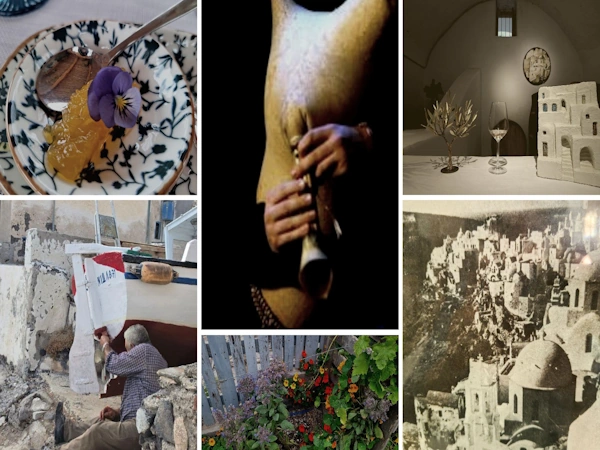
Quick answer: One of the most frequent asks in the local Facebook groups is what everyone should experience at least once in Santorini, and the replies tend to be the standard four you’d expect: the sunset in Oia, a catamaran tour, the Fira-to-Oia hike, a wine tour.
While any of them can be perfect for you, they’re also what you’d get from a cursory search engine run.
Here’s my answer instead, coming from someone who lives here year-round: hear ancient Greek instruments brought to life by the man who makes them for fun, eat something picked an hour earlier, taste wine in the house of Oia’s first female shipping magnate rather than a sterile modern room, and take the small boat across to Thirassia and right back in time.
The question gets asked every week: what’s worth doing at least once over here?
If you follow any local Facebook group at all, you’ve already seen it: What everyone should experience at least once in Santorini?
The answers stay consistent: Oia at sunset, the catamaran, the hike, a winery. Those are fine, but also happen to be the same four things that come back from every search, every guidebook, every AI assistant, which means that they’re the easiest to promote, sell and package, not that they’re the best for an individual traveler.
So here’s my own two cents, or rather, four things, and a reason to choose each instead.
1. Hear an instrument that almost stopped existing
Symposion in Megalochori

Yannis Pantazis brings back the sounds of ancient Greece, and his collection is why the Cycladic bagpipe, the tsambouna, still exists on the island at all—he tracked down the last pipers on this island before they died, and taught the grandson of one of them.
You can hold some of those instruments and become part of a music band after four seconds of training, which is a thing no recording can ever capture.
It’s not open year-round; the doors close in October to allow Yannis some rest and room to breathe.
I wrote the full story here.
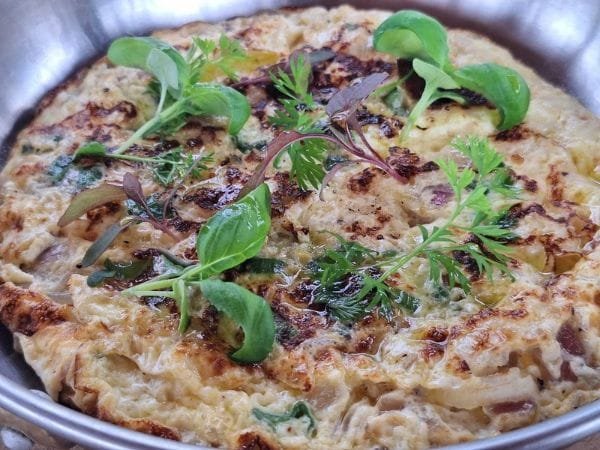
2. Taste the full range of flavors of Santorini’s waterless soil.
Kissiras Microgreens in Pyrgos
There’s a microgreens farm in Pyrgos, widely celebrated in the press, yet relatively unknown to a casual visitor.
The reason this belongs on a list with a concert and an island: you’re eating a few metres from where it grew, which on an island that imports most of its food is a stranger experience than it sounds.
3. Drink wine in a house of a woman who built a shipping fleet, not a tasting room
Domus K 1
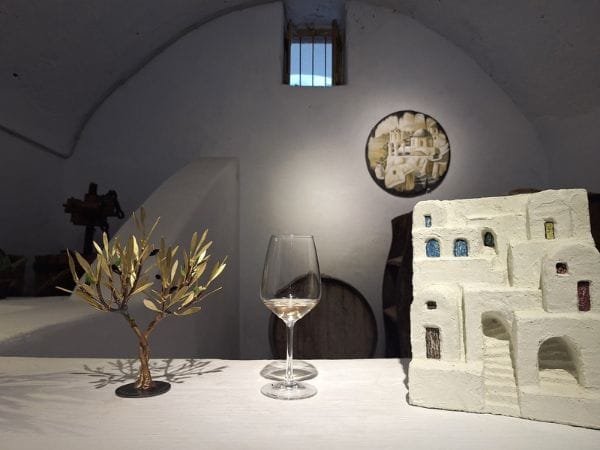
Domus K 1885 in Oia is a captain’s house from the 1880s, and the tasting happens in the house itself.
The difference between that and a winery visit is the difference between being shown a product and being let into a room. You’re sitting where a shipping family sat, in the Oia that existed before the Oia everyone photographs.
They’re open to mid-November, which makes this one of the few Oia things still running as the season closes.
4. Take the small boat to Thirassia
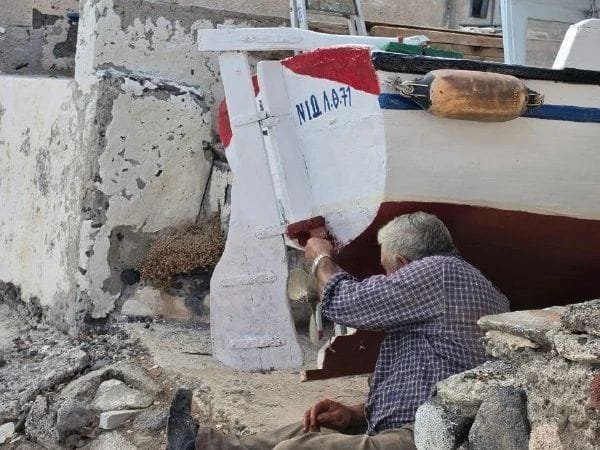
Twenty minutes from Ammoudi, and you’re on the piece of the caldera that broke off in the eruption and never got rebuilt. Fewer than two hundred people. No cruise berth. Cave houses in a gorge at Agrilia where seven hundred people lived until the tomato factories closed.
From up there you see the whole rim at once, and everyone over here is looking at a view while you’re looking at them.
What the four have in common
A sunset doesn’t know you’re there. A catamaran takes a hundred people a day. Both are worth doing. Neither is the thing you’ll describe to someone at home in six months.
The things you remember from a place are almost always the ones where somebody was there with you, doing what they do.
If you’re here in the next few weeks
October and early November are the easiest weeks of the year to do any of this. The island is quiet, the light is low, and nothing needs booking three weeks out.
My village walks are still running in Oia and Pyrgos, and a full private day can take in two or three of the four above.
After mid-November the island goes quiet properly, and most of this waits until spring.
A day built around two or three of these
Most of what’s on this list runs on people knowing their way around the island and one other. Tell me your dates and what pulled you in — the music, the food, the wine, the crossing — and I’ll shape the day around it.
Frequently Asked Questions
What is the one thing everyone should experience in Santorini?
Most lists give the sunset in Oia, a catamaran cruise, the Fira-to-Oia hike, or a wine tour. And yet, the experiences people remember longest tend to be the ones where there was also a human presence—hearing ancient Greek instruments played by the man who builds them in Megalochori, eating produce picked the same morning at a farm in Pyrgos, tasting wine inside an 1880s captain’s house in Oia, or crossing to Thirassia, the half of the caldera that was never reinvented for tourism.
What can you do in Santorini that isn’t the sunset or a boat trip?
Plenty, and most of it is inland. Megalochori has a cultural center dedicated to ancient Greek instruments and live performance. Pyrgos has a working microgreens farm. Oia has a captain’s house from the 1880s where wine is poured in the house itself. Thirassia, twenty minutes by boat from Ammoudi, has cave-house settlements and fewer than two hundred residents.
Is Santorini worth visiting in late October and November?
For some of the best things on the island, yes. Late October is quiet, the light is low, and nothing needs booking weeks ahead. Several village businesses stay open into mid-November. From mid-November the island goes properly quiet and most seasonal businesses close until spring.
What is still open in Santorini in November?
Year-round village businesses, some wine tastings into mid-November, and private walks and tours, which run through the winter. Beach operations, most seasonal hotels and many caldera restaurants close from late October. Cultural programs generally finish their season in October and resume in spring.
Where can you hear ancient Greek music in Santorini?
At Symposion in Megalochori, a cultural center built around ancient Greek instruments, mythology and live performance, run by the musician and instrument maker Yannis Pantazis. He researched and revived the tsambouna, Santorini’s own bagpipe, after the tradition died out on the island. Daytime presentations, an instrument-making workshop and evening performances run through the season.
Can you visit a farm in Santorini?
Yes. There is a microgreens farm in Pyrgos where visitors can see the growing and eat produce picked the same day. On an island that imports most of its food, eating something grown a few metres away is unusual. Visits are by arrangement rather than drop-in.
What is the most unusual wine tasting in Santorini?
Tasting inside a house rather than a tasting room. Domus K 1885 in Oia is a shipping captain’s house from the 1880s, and the tasting takes place in the house itself rather than a purpose-built visitor space—closer to being let into a room than being shown a product.