
Easter in Santorini can be beautiful, “magical”, “authentic”, and “unmissable”, but doesn’t work the way most travel articles describe it. First of all, it works best when you narrow it down to one village at a time, one event per day, and set realistic expectations about access. The most meaningful experiences are public rituals like the Good Friday Procession in Pyrgos and local Easter Sunday meals, while many traditions remain private and not bookable by definiton.
Update: Metaxi Mas just confirmed opening on Easter Sunday. Easter Sunday availability drops significantly across the island, so you should always book that meal in advance.
There’s two very different layers to it:
- public rituals you can attend
- private traditions you cannot access and should not try to
Most confusion comes from mixing the two.
This guide will help you understand what’s realistically possible during Easter week in Santorini, and how to plan your days without relying on outdated assumptions.
Easter in Santorini: Quick Answers
Is Easter in Santorini worth it?
Yes, if you plan around what’s actually public. You can attend processions and church services, but most food traditions and family gatherings remain private. Easter works best when you focus on one event per day and avoid trying to experience everything.
What is the best Easter event in Santorini?
Good Friday in Pyrgos is the most visible and structured public ritual on the island. The village lights up gradually as the procession moves through it, creating the most complete Easter experience accessible to visitors.
Can you eat magiritsa in a restaurant in Santorini?
Not reliably. Magiritsa is traditionally eaten at home after midnight on Holy Saturday and is rarely offered on restaurant menus. Some places may adapt it, but you should not plan your experience around finding it.
What should you book in advance for Easter in Santorini?
Easter Sunday lunch. This is the one meal that holds the entire day together and fills up quickly across the island. Without a booking, options become very limited, especially in smaller villages.
Is Santorini crowded during Easter?
Yes, especially in Pyrgos on Good Friday. Expect high density, limited movement, and slower logistics during major events. Outside of peak moments, the island remains relatively manageable.
What is the Lazarus cross in Santorini?
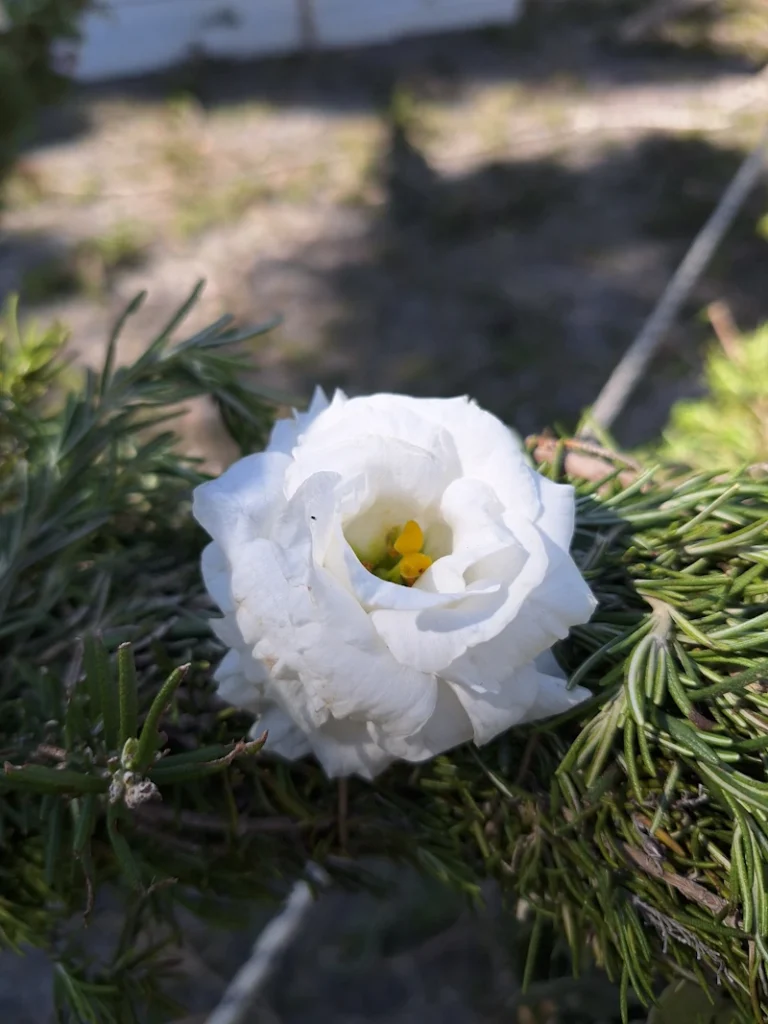
A locally built wooden cross covered in herbs like rosemary and raised in the days before Holy Week, usually by younger residents. It reflects community preparation and local identity, rather than a staged experience for visitors.
When should you arrive for Good Friday in Pyrgos?
Arrive at least 60–90 minutes before the procession begins. The village fills quickly, and movement becomes very limited once it starts. Early arrival allows you to choose your position and experience the lighting transition as it builds.
Easter in Santorini: 2026 Dates
- Good Friday: April 10, 2026
- Holy Saturday: April 11, 2026
- Easter Sunday: April 12, 2026
These three days carry most of the visible activity on the island.
What Should You Do Each Day During Easter in Santorini?
Good Friday in Santorini (Best: Pyrgos)
If you attend only one event, this is the one.
Pyrgos hosts the most visible Easter ritual on the island. The village lights up (see below), and the procession moves through narrow streets starting around 20:00.
What works:
- Arrive early, ideally before sunset
- Eat before the procession begins
- Choose your position in advance:
- near the church (close, dense, limited view)
- in the square (stable, partial view)
- outside the village (best overall perspective)
What doesn’t:
- Arriving late and expecting to move easily
- Trying to “find a better spot” once it starts
- Expecting a calm or comfortable environment
Pyrgos is powerful, but crowded, smoky, and physically dense.
How Does the Pyrgos Lighting Actually Work?
Most descriptions of Pyrgos talk about “lanterns” or “candles”, which is only partially accurate.
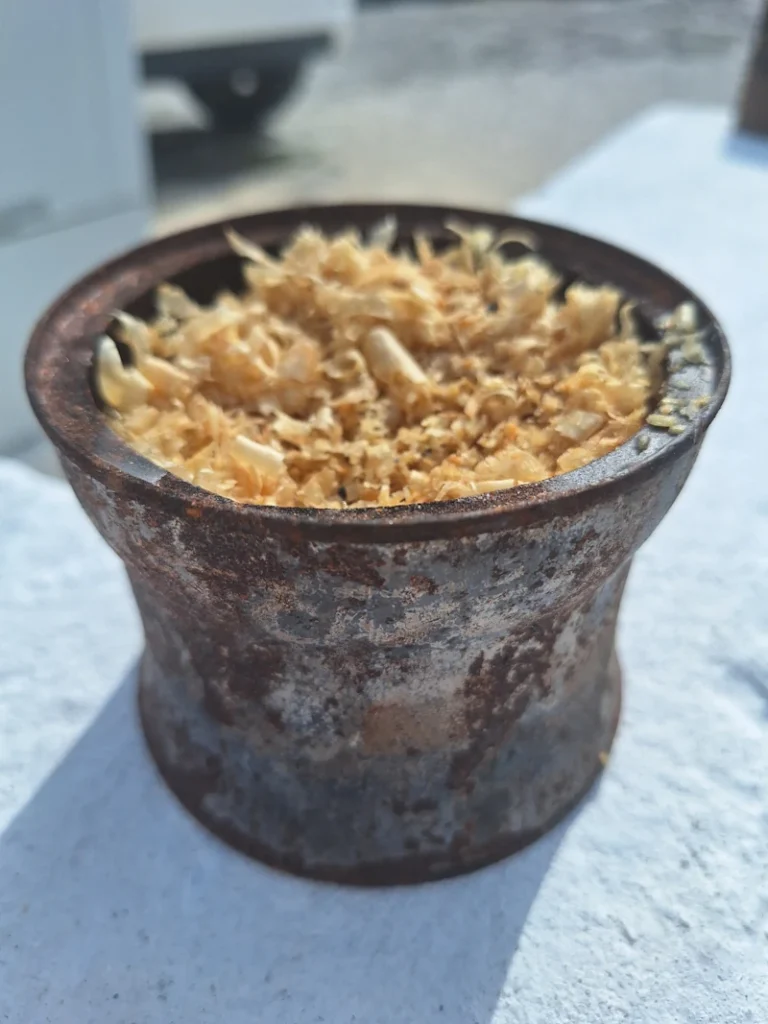
What you’re seeing are χιλιάδες ντενεκεδάκια (small metal cans, quite often from Nescafe) placed along pathways, terraces, rooftops, and the slopes of the village. Not all of the home or property owners are happy about them, as the clean-up tends to be equally dramatic.
These are filled with a simple fuel, usually oil or paraffin, and lit by hand in the early evening, the locals moving quickly through the village, often younger men who take on the role each year, going from one point to another to keep the fires going as the daylight fades.
The effect builds gradually.
- At first, it looks scattered
- Then the paths connect
- And by nightfall, the entire village’s outlined in flickering flames
This is why Pyrgos looks different from other Good Friday processions in Greece.
It’s not just the procession itself.
It’s the distinct Cycladic lines and topography of the village bright and visible in the dark.
What Does This Means For Where You Should Stand?
This detail changes how you should experience it. Most visitors arrive within a 60–90 minute window before the procession, which starts around 20:00.
If you stay inside the narrow streets:
- you’ll feel the density of the procession
- but you won’t see the full structure of the lighting
If you step slightly outside the village core:
- you can actually see how the fire lines define the entire shape of Pyrgos
For many people, that view is more impactful than being inside the crowd.
What most blogs don’t mention about Easter in Santorini
- The lighting is manual, not staged lighting infrastructure or drone shows
- It produces real smoke and soot, not just atmosphere
- It depends on weather and wind, so it’s never identical year to year
This is part of why Pyrgos feels powerful, but also why it’s not a controlled or comfortable event.
Holy Saturday (Resurrection Night)
This is not a performance, but a church-centered, intensely private moment.
At midnight, churches across Santorini mark the Resurrection with candles and fireworks.
What works:
- Choose one church and stay there
- Arrive early enough to settle in
- Treat it as a single experience, not a sequence of stops
What doesn’t:
- Trying to move between locations
- Expecting a structured, scripted “event”
- Treating it as something to optimize or compare
Remember: churches that are visually striking are not necessarily more “authentic” than smaller parish ones.
Easter Sunday (Food, Not Movement)
This is the food day.
Lamb roast, family gatherings, and utter freeze on everything else.
Some taverns serve Easter lunch, but many of the most meaningful meals still happen privately.
What works:
- Book lunch in advance
- Stay in one area
- Build the day around a single meal
What doesn’t:
- Trying to visit multiple places
- Expecting availability without booking
- Treating it like a sightseeing day
What You Should Not Expect from Easter in Santorini
This is where most plans fail.
You should not expect:
- A fully “bookable” Easter experience
- Guaranteed access to traditional foods like magiritsa
- Smooth logistics across multiple villages
- Quiet or uncrowded major events
Magiritsa, for example, is traditionally eaten at home after midnight and is not reliably available in restaurants.
Understanding this early removes most of the friction.
So Where Does the Food Actually Fit In?
Food during Easter works best when approached simply:
- Focus on Easter Sunday lunch
- Choose one location, not multiple
- Prefer village taverns over high-traffic areas
Places like Akrotiri, Megalochori, Monolithos, Kamari and Pyrgos tend to align better with the rhythm of the holiday than the caldera front.
Easter in Santorini: 2026 Weather
Numbers don’t tell the full story. Wind and light change how Santorini feels in the evening. Always check conditions close to your visit.
Weather during Easter in Santorini
April conditions are mild but not stable. Wind and light can change how the island feels more than the temperature itself.
👉 Check live weather in Santorini
Even on clear days, evenings cool down quickly, especially in exposed areas like Pyrgos.
What works:
- layering (light jacket, scarf)
- comfortable walking shoes
- modest clothing for church
This is not beach weather. It’s walking, observing, and slower movement.
The Biggest Planning Mistake
Trying to experience everything.
Easter in Santorini works as a sequence, not a checklist.
- one village
- one event per day
- one well-timed meal
The more you move, the less it makes sense.
Preparation before Holy Weekend
What happens before Easter weekend in Santorini?
By the time visitors arrive for Easter weekend, most of the visible work’s already been done.
In villages like Pyrgos, preparation starts days in advance.
Paths are cleaned.
Routes are defined.
And across the village, hundreds of small metal cans (ντενεκεδάκια) are placed by hand along walls, steps, rooftops, and terraces.
These will later be filled and lit to outline the entire village in fire.
The crosses and quiet competition
One of the lesser-explained elements is the construction of the Lazarus crosses.
These are built locally, often by younger residents, and raised in the days leading up to Holy Week.
There is no formal competition, but there is a clear sense of pride between neighborhoods.
- size
- structure
- placement
Each cross reflects the effort of the people who built it.
It’s not presented as a performance for visitors.
It’s something that happens within the village, whether anyone is watching or not.
Local moment: Lazarus cross raising
This is one of the traditions that still happens locally, often without being explained in travel guides.
Here’s a recent video of the Lazarus cross being raised in Santorini:
Source: local Facebook video (credited)
Why this matters for visitors
By the time Good Friday arrives, what you’re seeing is not a staged event.
It’s the result of several days of preparation, coordination, and local participation.
That’s also why:
- timing matters
- positioning matters
- and not everything is immediately visible unless you understand what you’re looking at
The Honest Bottom Line
Easter in Santorini is not about seeing everything.
It’s about:
- being in the right place
- at the right time
- with the right expectations
If you approach it this way, it becomes one of the most grounded and memorable periods to visit the island.
What if you want someone to plan it for you?
If you want your Easter in Santorini structured around your exact dates and location, I offer a short planning session.
I map your days based on:
- timing
- crowd flow
- what’s actually open
- and how you prefer to move
→ Tell me your dates, I’ll take it from there
If you prefer to read this guide in Spanish, you can find the full version here.